Method
A short typing warm-up in the morning
Why a few minutes of typing practice in the morning help you stick with touch typing for the rest of the day.
Automatically translated from German. Read the original
If you are switching to touch typing, you probably know this pattern. It works during practice, but the moment an email has to go out quickly, your old habits are back: two fingers, eyes on the keys, and the new technique is gone for the rest of the day.
One simple habit helps: practise for a few minutes in the morning, before the working day starts. We noticed this ourselves. After a short session in the morning, touch typing holds up much better through the day. A second session in the afternoon helps too, but less than the first one.
What happens overnight
Movements you practise settle in between sessions, and much of that happens while you sleep. In a well-known study by Matthew Walker and colleagues (2002), participants typed a number sequence on a keyboard. After a night's sleep they were clearly faster than the evening before, without any extra practice. People who trained in the morning and were tested in the evening, with no sleep in between, barely improved.
So what you practised yesterday has settled by the morning. It is still not as automatic as the old movements you have used for years. What matters here is regular practice and enough rest.
Why the first few minutes count
After a break, your first keystrokes are slower and less sure. Motor learning research calls this warm-up decrement. It fades after a few minutes, and your typing is back to where it was the day before.
Without a warm-up, that shaky phase lands in the middle of your working day. Under time pressure you are slower than with your old method, and it is tempting to fall back on it. Or you are ten emails and twenty Slack messages further along before you know it, and the new habit, which is only just forming, is forgotten. A short warm-up in the morning gets the shaky phase out of the way before it matters, and your posture and feel for the keys are fresher.
The day becomes practice
After that, something useful happens. Every email and every message you type with ten fingers is one more repetition of the right movement. If you slip back into your old method instead, you spend the day practising the old habit.
That is why the morning session has a bigger effect than one in the afternoon: it decides which method you use for most of the day. A second session later on refreshes things when your focus drops, but by then you have already been typing for hours.
What a session looks like
- Five to ten minutes are enough. The point is to warm up, not to set a record.
- Before your first text of the day. Ideally before you open your email or chat.
- Slow and clean. Type at a pace where almost every keystroke is right. Speed comes later.
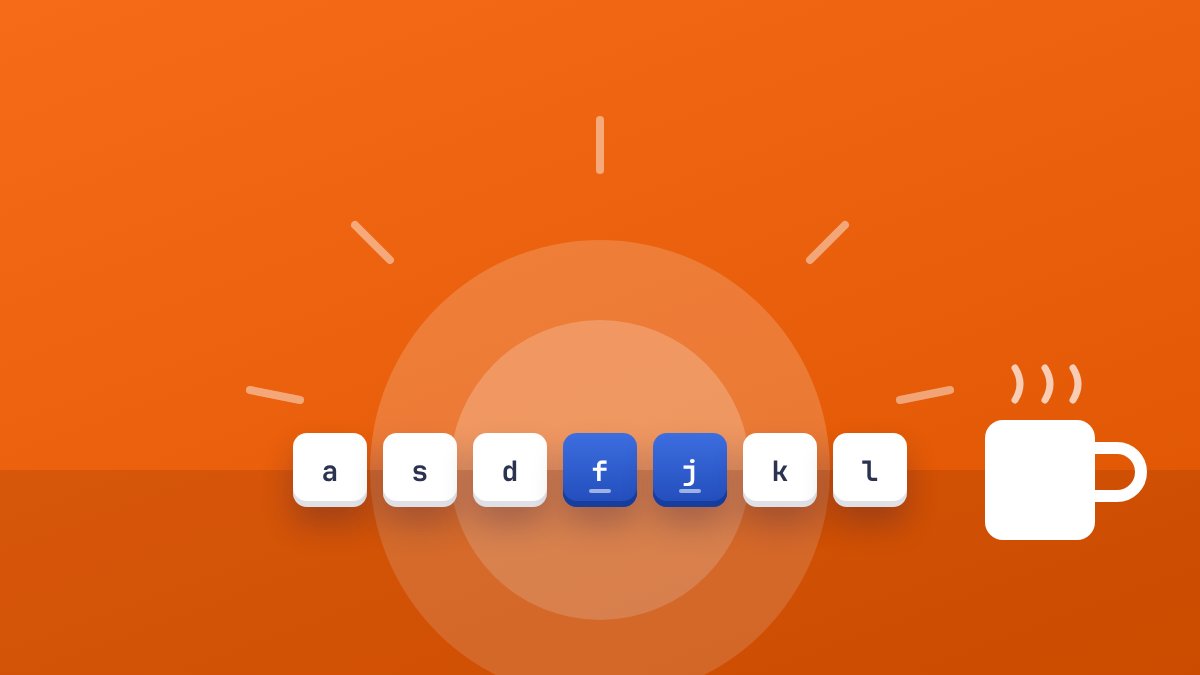
- Tie it to a fixed cue. For example after your first coffee, or right after you switch on your computer. If you decide in advance when you will practise, you are more likely to keep it up.
How Keypacer helps
Every session starts with a warm-up: easy, common words with keys you have not practised for a while. It does not count towards unlocking new keys, so you can ease in without pressure. In the practice plan you choose days, a time and, if you like, a cue such as "after coffee". Keypacer then adds a recurring event with a reminder to your calendar.
Try it for a week: five minutes every morning, before you type anything else. Start training now