Method
Accuracy before speed
Why error-free typing is faster in everyday use than high speed with lots of corrections, with a worked example.
Automatically translated from German. Read the original
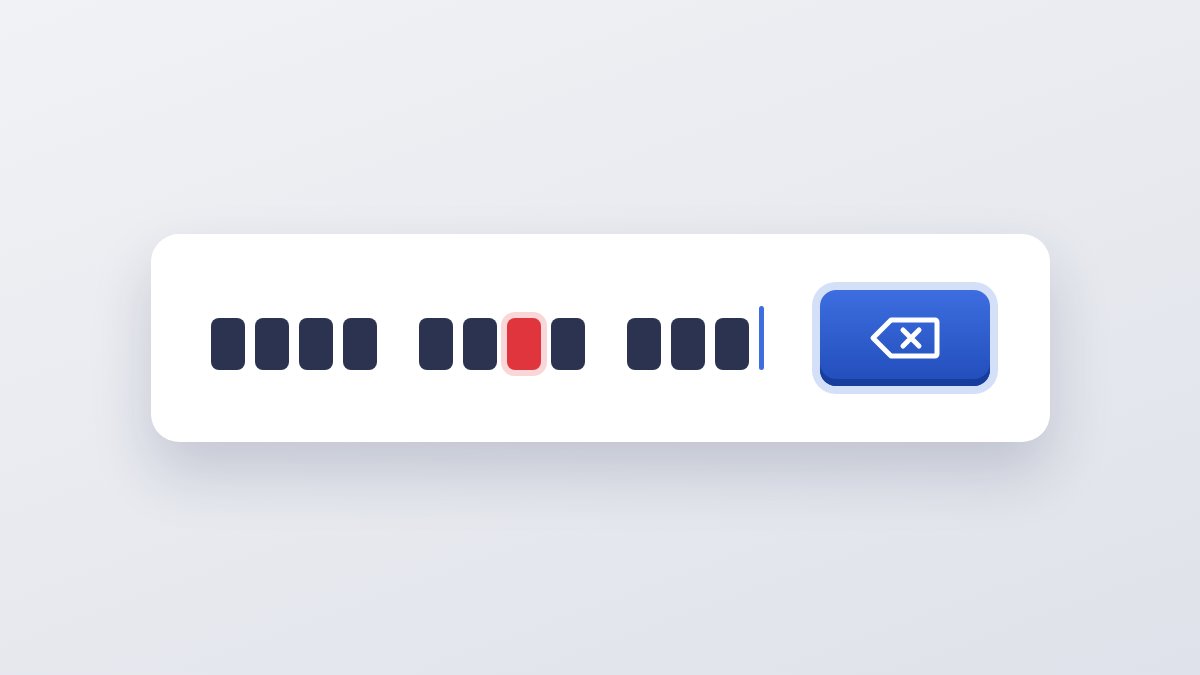
A typing test shows one number: words per minute. In everyday use something else counts, namely how quickly a text is finished and correct. These two values are often far apart, and the difference is the mistakes.
What typing tests measure
Many tests only subtract the errors that remain at the end. If you delete a mistake straight away and retype it, you lose nothing in the score except the time it took. The result therefore looks better than the typing feels.
In everyday use you also have to notice the mistake first. Sometimes right away, sometimes three words later, sometimes only when proofreading.
What a mistake costs
A single typo consists of several small steps:
- the wrong keystroke,
- noticing it,
- backspace, often several times,
- the new keystroke,
- getting back into the rhythm.
Let's roughly assume one second for all of that. One second per mistake doesn't sound like much. But the estimate is conservative, and it rarely stays at one mistake.
A worked example
Two people type for one minute. As usual, a word counts as five characters.
| Person A | Person B | |
|---|---|---|
| Speed in the test | 70 WPM (350 characters) | 55 WPM (275 characters) |
| Error rate | 5 % | 1 % |
| Errors per minute | about 17 | about 3 |
| Time spent correcting | about 17 seconds | about 3 seconds |
| Everyday speed | about 50 WPM | about 52 WPM |
Person A is clearly faster in the test. In everyday use Person B is ahead, even though they type more slowly. With more than one second per mistake, the gap grows.
The numbers are assumptions, not measurements. But they show the principle: above a certain error rate, more speed gains you nothing.
Why mistakes stick
Your fingers learn every movement they repeat, including the wrong one. If, for example, you regularly miss between e and r, you are practising exactly that mistake. The faster you type, the more often it happens.
Typing more slowly and cleanly feels like a step backwards at first. But it is the shorter route, because you only practise the right movement.
How to practise accuracy
- Type deliberately slower as soon as mistakes increase. The goal is a pace at which almost every keystroke lands.
- Count the first attempt. A mistake you correct immediately is still a mistake.
- Practise your weak keys on purpose. Usually a few keys or letter pairs cause most of the mistakes.
- Stop when you get tired. As concentration drops, the error rate rises, and then you mostly practise mistakes.
How Keypacer helps you
When you hit a wrong key, you stay on the letter until you hit the right one. The first attempt is what counts. If your accuracy drops, Keypacer hides the speed display until you type accurately again. The next exercise is built from the keys and letter pairs where you miss or hesitate most often.
When speed rises
Speed rises once the movements are in place. If you type cleanly, you get faster on your own over time. The other way round rarely works: if you type fast and with mistakes, you later have to unlearn them with effort.